WR
Rapid standing water removal
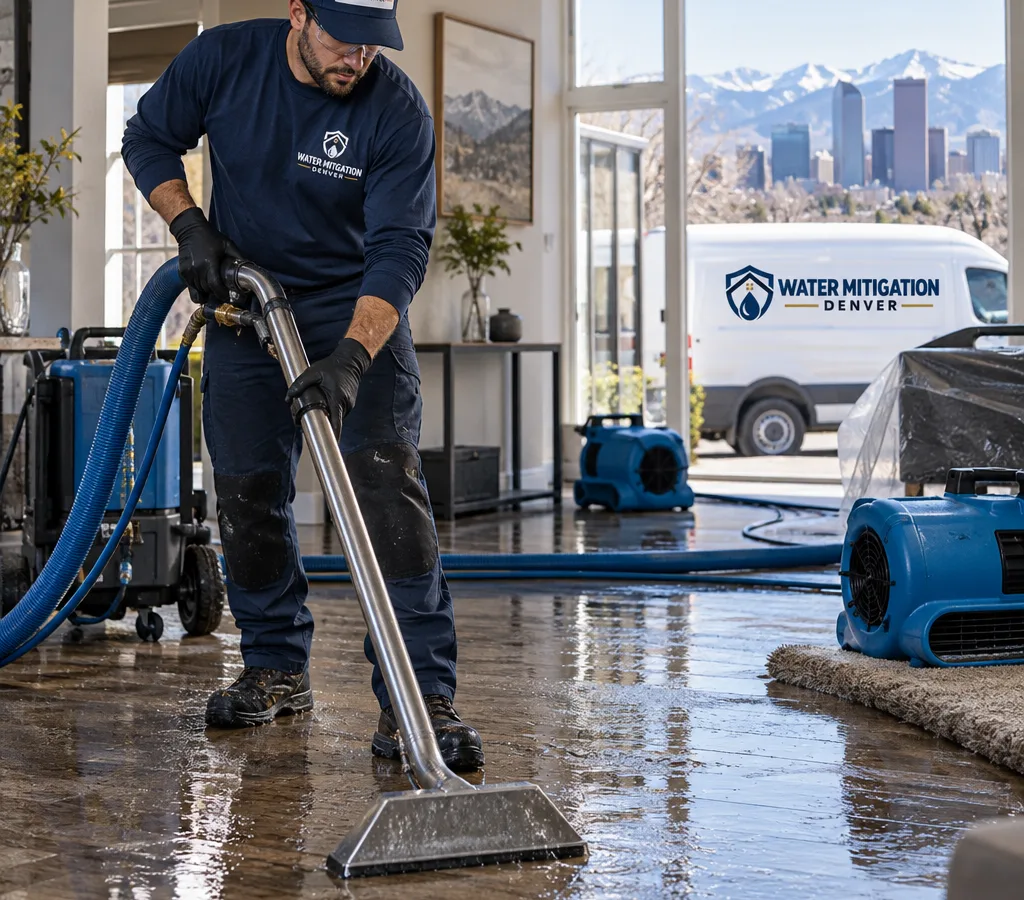
We use commercial extraction tools to pull water from hard surfaces, carpet, and padding so drying can actually work instead of chasing puddles.
Serving Denver, Colorado & surrounding areas
Water extraction service • Denver, CO
When water is still on the floor, every minute matters. We remove standing water fast, protect what can be saved, and set up a clear drying plan so your property can get back to normal.
✓Commercial extraction tools
✓Moisture-mapped drying
✓Insurance documentation
Control the spread early
Water extraction Denver homeowners and property managers can count on is the work that happens before drywall swells, flooring cups, and moisture spreads into cavities. If you have a supply line break, an overflowing tub, a leaking appliance, or water tracked in from snow and ice, removing the bulk water quickly is the single biggest step you can take to reduce secondary damage.
Our team at Water Mitigation Denver, CO focuses on emergency water removal: extracting standing water, checking where it traveled, and starting controlled drying. In Denver, that often means handling finished basements, garden-level units, and older homes where water can move under plank flooring or behind baseboards before it shows on the surface.
You will get a practical plan, not vague reassurance: what needs to be extracted, what needs to be opened for access, what equipment will run, and what we are documenting for insurance.
Extraction and drying support
We use commercial extraction tools to pull water from hard surfaces, carpet, and padding so drying can actually work instead of chasing puddles.
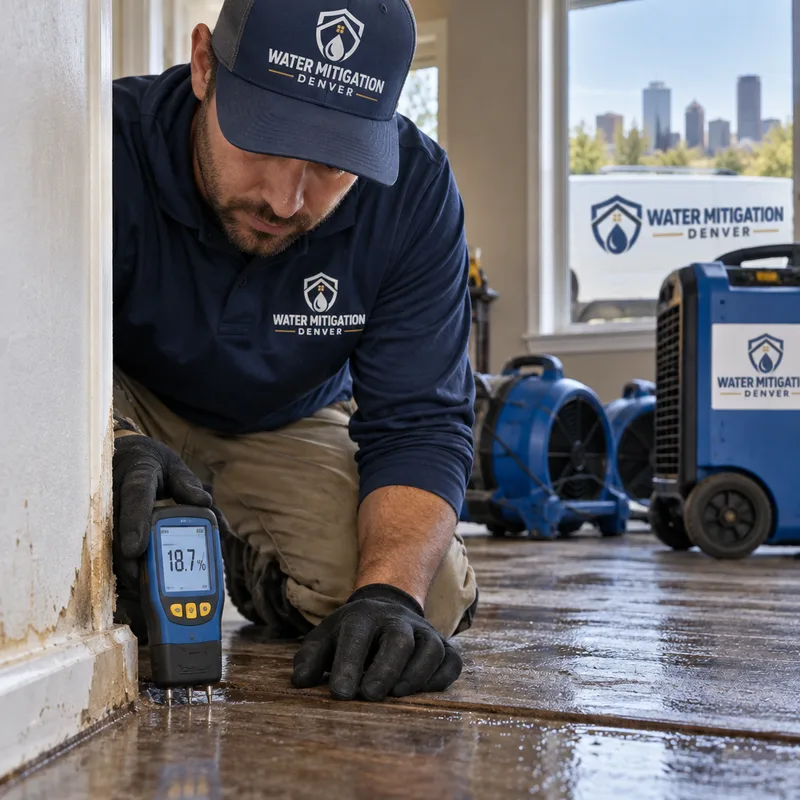
Moisture does not stop at the visible water line. We trace migration into baseboards, subfloors, and lower wall cavities so wet materials are not left hidden.
Air movers and dehumidifiers are placed to move air across wet surfaces and control humidity, with special attention to enclosed rooms and basement areas.
We record what happened, what we found, and what we did. That typically includes moisture readings, photos, and notes that support your claim file.
We isolate affected areas when needed, protect walk paths, and explain what has to be moved or removed so there are no misunderstandings mid-job.
Look beyond the puddle
Emergency water removal in Denver often looks straightforward at first. Then the moisture map tells a different story. Water can wick up drywall, travel under floating floors, soak the underside of carpet tack strips, and settle in low points along foundation walls.
We check the places that commonly stay wet:
Denver housing adds a few practical considerations. In areas with many basements and garden-level units, water can move along slab edges and show up far from the original source. In neighborhoods with older construction, layers of flooring and patchwork subfloors can create voids that slow drying unless they are identified early.
A controlled extraction sequence
We identify the water source, confirm it is controlled, and look for immediate hazards like wet electrical areas or ceiling bulges. If the source is still active, the priority is stopping it before extraction begins.
We remove standing water using high-capacity extractors and, where appropriate, weighted extraction on carpet. The goal is to get as much water out as possible before we rely on evaporation.
We measure moisture levels in affected materials and track how far the water traveled. This step drives decisions like whether baseboards come off or small openings are needed for airflow.
We set air movers and dehumidifiers to match the structure and the affected rooms. Drying is monitored with follow-up readings so equipment is not removed too early.
You receive a straightforward summary of what was impacted, what was removed (if anything), and what the next phase looks like. If additional services are needed beyond extraction and drying, we outline them clearly before you commit.
Understanding the scope
Water extraction in Denver typically ranges from about $450 to $1,500 for a small to moderate affected area with standard equipment and a short drying period; larger losses or multi-room impacts often run $1,500 to $4,000+ once drying days, equipment load, and monitoring are included. Price moves most with the volume of water, how long it sat, how many rooms and flooring types are involved, basement access, and whether materials need to be detached or removed to dry correctly. The exact cost is confirmed after on-site inspection and moisture mapping.
Request Emergency ServiceCustomer experiences
“We had a water line let go in the basement and the water was spreading under the flooring. They got the standing water out quickly, explained what was wet behind the scenes, and kept us updated with readings until it was dry.”
“Our tenant reported a toilet overflow late in the day. The response was fast, the extraction was thorough, and the documentation made the insurance conversation easier.”
Answers before extraction starts
For emergency water removal in Denver, the goal is to get extraction started as soon as you have the source stopped and it is safe to access the affected area. Availability depends on current call volume and travel time, but we prioritize active losses with standing water because delays increase the chance of swelling, staining, and microbial growth.
Stop the water source if possible, shut off power to wet areas if there is any risk, and move small valuables and electronics out of the affected rooms. If you can do so safely, blot or wet-vac small surface water and place aluminum foil or wood blocks under furniture legs to reduce staining and rust transfer.
Sometimes, yes. If carpet pad is saturated, or water has traveled under floating floors and cannot dry from the top surface, removal or partial detachment may be the fastest way to prevent odor and permanent warping. We base that decision on moisture readings, how long the water sat, and the flooring type, not guesswork.
Most drying takes several days, but the timeline depends on how much water entered the materials, the airflow paths available, and the humidity level inside the structure. Basements and enclosed rooms often take longer because there is less natural air exchange, so equipment placement and monitoring matter.
Yes. We document the affected areas, the equipment used, and moisture readings so you have clear records for your adjuster. Coverage depends on your policy and the cause of loss, but good documentation from the start usually reduces back-and-forth about what was wet and what actions were taken.
Yes. Clean water from a supply line is handled differently than contaminated water, which can require stricter containment, disposal, and material removal to protect health. If the water source is questionable, we treat it cautiously and explain what that means for cleanup steps and what can or cannot be saved.
Yes. Multi-unit losses often involve coordinating access, documenting shared walls and floors, and focusing extraction and drying where water migrates between units. If an HOA or building manager needs specific reporting, we can align documentation to what they typically request.
Start extraction and documentation
Tell us what happened and where the water is showing up. We will walk you through immediate next steps, arrive with the right extraction equipment, and document the loss so you have a clear record for insurance.