SC
Written scope and drying plan
You get a documented approach that matches the damage: what gets removed, what can be dried in place, and what equipment is required to reach safe moisture levels.
Serving Denver, Colorado & surrounding areas
Water restoration service • Denver, CO
Fast, careful cleanup and repairs for homes and businesses in Denver, CO. Get a clear scope, documented drying plan, and steady communication from first inspection through final rebuild.
✓Moisture-mapped drying
✓Cleanup through rebuild
✓Homes and businesses
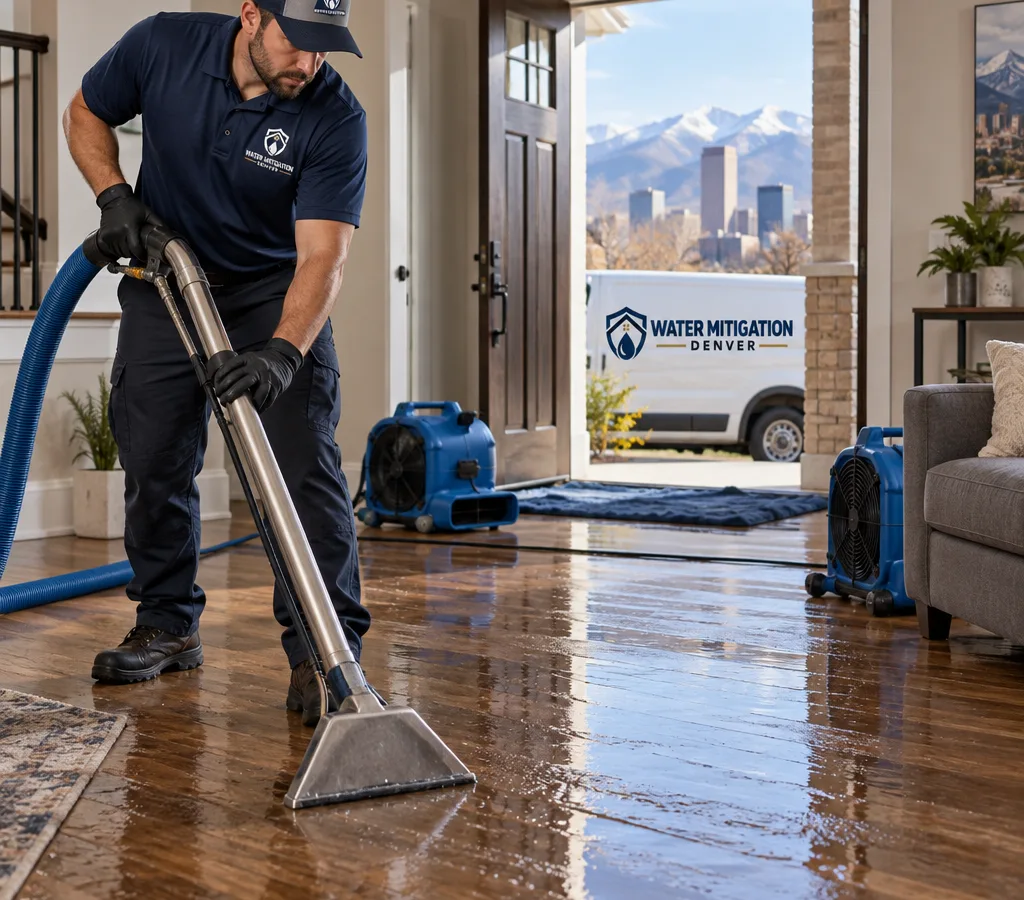
Control the damage early
Water damage spreads quickly through drywall, flooring, and insulation. The first goal is to stop the source and remove water, but the real risk often comes next: moisture trapped in cavities that can swell materials, warp wood, and support microbial growth.
Water Mitigation Denver provides water damage restoration in Denver for burst pipes, appliance leaks, roof intrusions, and sewer backups. We handle the full job: water extraction, demolition when needed, structural drying, cleaning and deodorizing, and water damage repair so you can get your space back.
In Denver, temperature swings and dry indoor air can hide problems. Materials can look dry on the surface while framing or subfloors still hold moisture. That is why our crews rely on moisture mapping and readings during the drying cycle, not guesswork. If you need action today, the safest next step is an on-site inspection and a written plan before any work starts.
We work across central Denver and surrounding neighborhoods. Older homes in Capitol Hill and Congress Park often have plaster walls and layered flooring that require careful, selective demolition. Wash Park and Bonnie Brae have many finished basements that need fast dehumidification and containment to protect drywall and trim. In Five Points, mixed-use buildings and older construction details can make leak tracing and drying access more complex. Each property gets a tailored drying strategy based on structure type, affected materials, and what we find behind the surfaces.
Complete restoration support
You get a documented approach that matches the damage: what gets removed, what can be dried in place, and what equipment is required to reach safe moisture levels.
We use moisture meters and moisture mapping to find wet areas in walls, ceilings, and floors, then verify progress during dry-down.
We protect unaffected areas with plastic barriers, floor protection, and controlled demo so dust and debris stay where they belong.
When drying is complete, we can move straight into water damage repair such as drywall replacement, baseboards and trim, paint-ready prep, and flooring transitions.
We document the loss and the drying process so you have photos and notes that support claim conversations and decision-making.
Apartments, retail, offices, and homes all need fast stabilization. We stage equipment and work plans around access, occupants, and business hours.
From extraction to repair
Effective water damage cleanup in Denver, CO is a sequence of decisions, not a single step.
First we identify the category of water—clean supply line, gray water from a dishwasher or washing machine, or contaminated water from a sewer backup. That classification affects demolition, cleaning steps, and what materials can safely be saved.
Next comes extraction and controlled removal. We use commercial extractors for standing water and remove baseboards, drywall, or flooring only where readings and visual inspection show water migration. In many Denver properties, water runs along sill plates and under floating floors, so perimeter checks matter.
Then we set drying equipment and airflow. Air movers push evaporation, while dehumidifiers pull moisture from the air so materials can actually release water. We reposition equipment as readings change.
Finally, we clean, deodorize, and prepare for repairs. If the loss includes contents—area rugs, furniture, or stored items—we can help sort what can be cleaned versus what should be discarded based on exposure and condition.
For a broader look at related stabilization work, many property owners start by discussing water mitigation in Denver when they need immediate control of the situation before repairs begin.
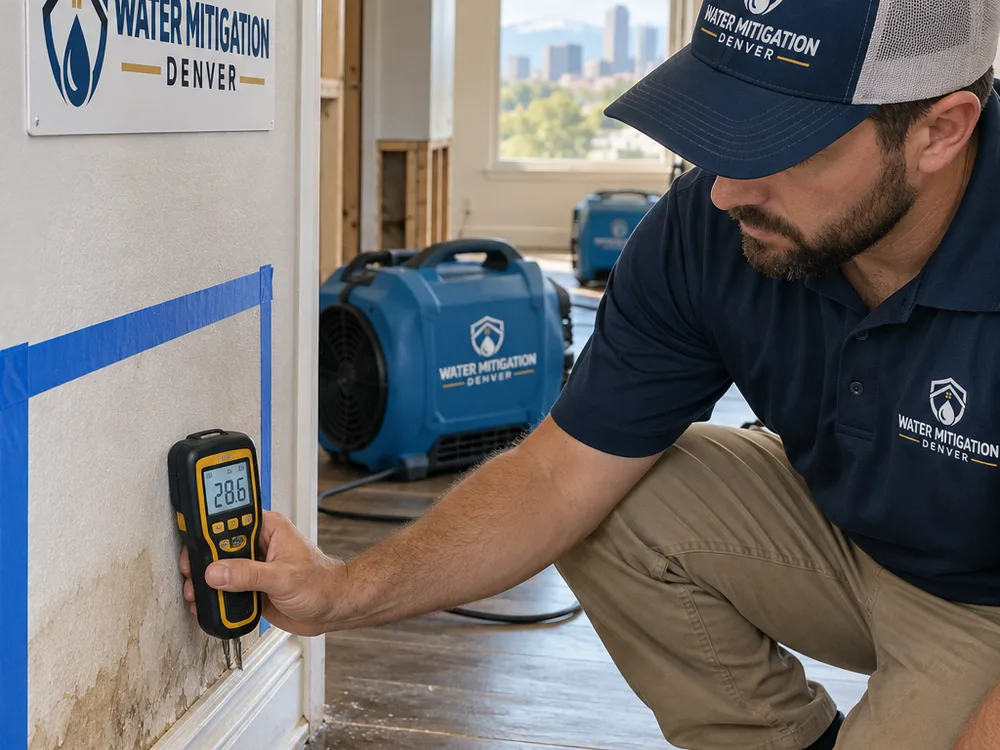
A measured restoration sequence
We identify affected rooms and likely water pathways, check for safety concerns including ceiling saturation, and document starting moisture conditions.
We extract standing water and perform selective demolition where needed to access wet cavities and stop secondary damage.
We place air movers and dehumidifiers sized to the loss, then monitor moisture content until materials reach dry goals appropriate for the structure.
We clean affected surfaces and apply treatments where conditions and water category call for it, especially in basements, bathrooms, and kitchens.
We complete the water damage repair work, such as drywall, paint preparation, trim, and flooring transitions, so the space is functional and finished.
Understanding the scope
Water damage restoration in Denver typically ranges from about $1,500 to $8,000+ for many residential losses, with small, contained clean-water incidents often landing at the low end and large multi-room losses or contaminated water pushing higher. A basic extraction and drying setup may be a few thousand dollars, while jobs that require demolition, antimicrobial cleaning, and rebuild can climb significantly.
Final cost depends on the amount of water, how far it traveled—including under floors and into wall cavities—the water category, access, equipment run time, and what materials must be removed and replaced. The most accurate number comes after an on-site inspection and moisture mapping.
Customer experiences
“A supply line broke while we were out, and water got into two rooms. They showed up fast, mapped moisture in the walls, and explained what had to come out versus what could be dried. The daily updates made it easy to track progress.”
“We needed Denver water damage repair after an upstairs leak stained the ceiling and soaked insulation. The crew contained the area, dried it properly, and the repairs blended in with the existing texture.”
Answers before restoration starts
In many cases we can start same-day, and the first visit focuses on stopping ongoing damage, extracting water, and setting a drying plan. Scheduling depends on access, the type of loss, and whether the structure has safety issues like a sagging wet ceiling that needs immediate stabilization.
Often you can stay in the home if the affected area can be contained and there is no safety concern, but some situations require temporary relocation. Sewer backups, extensive demolition, or drying equipment placed through key living areas can make it impractical to remain on site, especially with children or respiratory sensitivities.
Cleanup is the stabilization phase: extraction, selective demolition, drying, cleaning, and odor control. Water damage repair is the rebuild phase after materials are dry, such as replacing drywall, insulation, baseboards, and restoring paint and finishes to match.
Sometimes, yes, if the water is clean, the materials are structurally sound, and moisture readings show the area can dry effectively with proper airflow and dehumidification. If insulation is saturated, drywall has wicked water high, or flooring has trapped moisture underneath, removal is often required to prevent hidden damp areas from lingering.
Yes, we provide documentation such as photos, moisture readings, and a clear scope of work to support the claim process. Coverage depends on your policy and the cause of loss, so we focus on accurate documentation and a defensible drying and repair plan.
Shut off the water source if you can do so safely, avoid using electrical outlets or ceiling lights in wet areas, and move small valuables out of the affected zone. Then arrange an inspection quickly so extraction and structural drying can begin before moisture spreads into adjacent rooms and materials.
Start with a documented inspection
Tell us what happened and what areas are affected. We will schedule an inspection, document the damage, and walk you through the cleanup, drying, and repair steps for your Denver property.