SC
Source control and containment
Remediation starts by addressing the cause and protecting unaffected areas. We use containment when needed to limit cross-contamination during removal and cleaning.
Serving Denver, Colorado & surrounding areas
Water damage remediation • Denver, CO
When water gets into drywall, flooring, or framing, time matters. Our certified team contains the damage, dries the structure, and documents the work so you can move forward with confidence.
✓Certified remediation team
✓Moisture-guided drying
✓Written scope and documentation
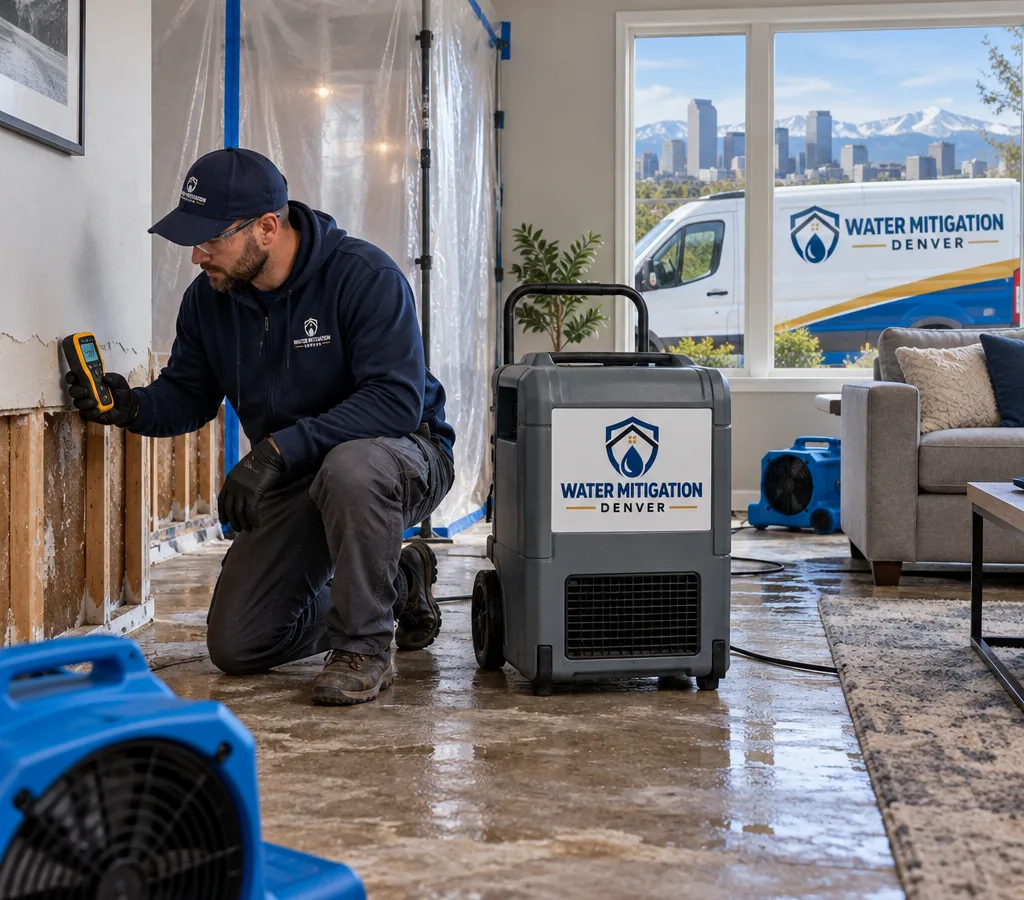
Control hidden moisture early
If you are searching for water damage remediation Denver CO, you are usually dealing with more than a wet carpet. Water can wick up walls, soak under tile, swell wood subfloors, and raise indoor humidity enough to create odor and mold risk.
Water Mitigation Denver focuses on practical restoration work: stopping secondary damage, drying what can be saved, removing what cannot, and leaving a clear record of what was done and why. We work throughout Denver, including older housing stock where plaster, lath, and layered flooring can hide moisture.
You will get a written scope, moisture readings to guide decisions, and a drying plan that fits the way your building is constructed. If the best path is demolition and rebuild, you will know early, not after days of running equipment.
A complete remediation scope
Remediation starts by addressing the cause and protecting unaffected areas. We use containment when needed to limit cross-contamination during removal and cleaning.
We use moisture meters and targeted inspection to identify wet building materials, including areas that feel dry on the surface but stay saturated underneath.
Air movement, dehumidification, and temperature are adjusted to the materials in place. Drywall, hardwood, and insulation all dry differently.
Some materials are not restorable after prolonged exposure, especially porous finishes. We remove affected materials to reach clean, dry, stable surfaces.
We document readings and progress so property owners, insurers, and contractors have a reliable handoff for repairs and reconstruction.
Local property context
Water damage in Denver is not one-size-fits-all. The most common challenges are tied to building type, layout, and how quickly water can migrate.
In Capitol Hill and other neighborhoods with older multifamily buildings, water often travels between units through shared walls and chases. That can turn a small supply-line leak into a multi-room drying project.
Around Washington Park and Platt Park, many homes have finished basements. Basements are especially sensitive because moisture can sit behind baseboards, under laminate, or inside wall cavities without obvious surface pooling.
In Lowry and Stapleton/Central Park, newer construction can still be vulnerable when water gets under floating floors or into engineered materials. Water can spread far from the visible wet area.
Across the metro, summer storms and winter freeze-related pipe failures can both trigger urgent remediation. The goal is the same in every season: find all affected materials, dry the structure to appropriate targets, and prevent secondary damage.
For a broader overview of our company and how we handle water-related emergencies in the Denver area, you can also learn about Water Mitigation Denver, CO.
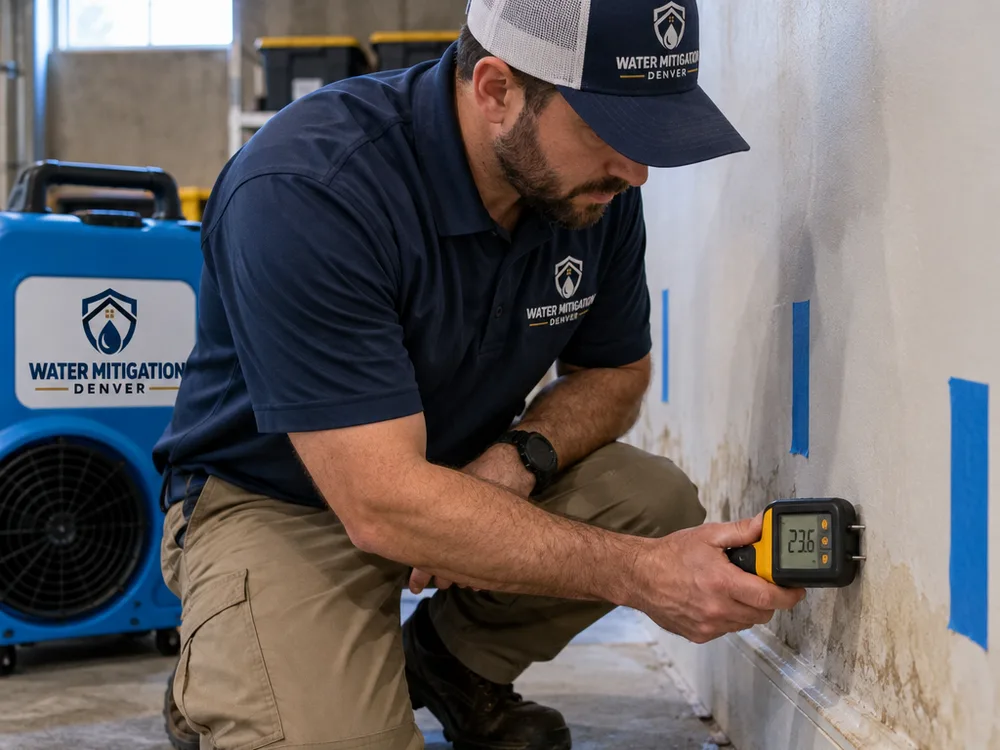
We inspect the affected rooms, check adjacent spaces, and take moisture readings to outline the true footprint of the damage, not just what you can see.
We identify the water source and condition (clean, gray, or black water) and set the safety approach. When contamination is present, we plan controlled removal and cleaning.
Standing water is extracted where possible. Unsalvageable materials are removed to expose wet assemblies and allow effective drying.
We place dehumidifiers and air movers, adjust them as conditions change, and monitor moisture levels until drying goals are met for the materials involved.
We clean affected areas and apply antimicrobial products when conditions warrant it. You receive documentation of the scope, readings, and completion status for the next phase of repairs.
Understanding the scope
Water damage remediation in Denver typically ranges from about $1,500 to $6,000 for many residential situations, with larger losses (multiple rooms, contaminated water, or significant demolition) often running $8,000 to $20,000+ depending on scope. A small, clean-water incident with limited drying may be at the low end, while a basement with soaked drywall, insulation removal, and extended dehumidification costs more.
Final pricing depends on affected square footage, how far water traveled into cavities, water category (clean vs. contaminated), materials involved (hardwood, plaster, insulation), access, and how long the water sat. The exact cost is confirmed after an on-site inspection and moisture mapping.
Customer experiences
“A supply line leaked while we were out of town and soaked the basement carpet and baseboards. The crew explained what had to come out, set up drying equipment the same day, and kept checking moisture until it was actually dry. The documentation made the repair handoff simple.”
“We had water come through a ceiling from the unit above. They contained the messy parts, removed what was damaged, and the place didn't smell musty afterward. Straightforward communication the whole time.”
Answers before remediation starts
Remediation should start as soon as it is safe because water can migrate under floors and into walls within hours. Quick extraction and structural drying reduce swelling, warping, and the chance that hidden moisture turns into odor or microbial growth. If you cannot start immediately, keep people out of visibly wet areas and shut off the water source if possible.
Water mitigation focuses on stopping and limiting damage (extraction, containment, initial drying), while water damage remediation includes the full corrective work needed to address affected materials and conditions (removal of unsalvageable building materials, cleaning, drying verification, and documentation). In real projects, the work overlaps, but the goal is the same: return the structure to a clean, dry, stable condition for repairs.
Sometimes, yes, but only if moisture readings show the drywall and wall cavity can dry to acceptable targets without trapping moisture. If insulation is saturated, if the water was contaminated, or if the drywall has wicked water and loses integrity, selective removal is usually the safer option. We confirm the approach with moisture mapping before deciding.
Many drying phases take about 3 to 5 days, but timelines vary with material type, how long the water sat, and whether demolition is required. Dense assemblies, wet insulation, and multiple affected rooms can extend the process. We monitor moisture during the job so drying ends when the structure is actually dry, not when a calendar says it should be.
Yes. We can provide documentation that is commonly needed for claims, including scope notes, moisture readings, and photos of affected areas and removed materials. Coverage depends on your policy and the cause of loss, but good documentation helps reduce delays and disputes.
Shut off the water source if it is safe, and avoid using electrical outlets or fixtures near wet areas. If you can do so safely, move small items off wet floors and place foil or plastic under furniture legs to reduce staining. Avoid running household fans in contaminated water situations; controlled containment and proper cleaning matter in those cases.
Start with an on-site assessment
Tell us what happened and what areas are affected. We will schedule an on-site assessment, explain what needs to be removed versus dried in place, and provide a written scope you can use to plan repairs and next steps.