CT
Containment that protects the rest of the property
We use physical barriers (poly sheeting), controlled entry, and negative air when appropriate to keep spores and dust from migrating into clean rooms, hallways, and HVAC returns.
Serving Denver, Colorado & surrounding areas
Mold mitigation service • Denver, CO
If you are seeing staining, smelling a musty odor, or dealing with a recent leak, our certified crews contain the problem fast, document what we find, and carry out a clear remediation plan so you can use the space again with confidence.
✓Certified crews
✓Containment and HEPA methods
✓Documented remediation plan
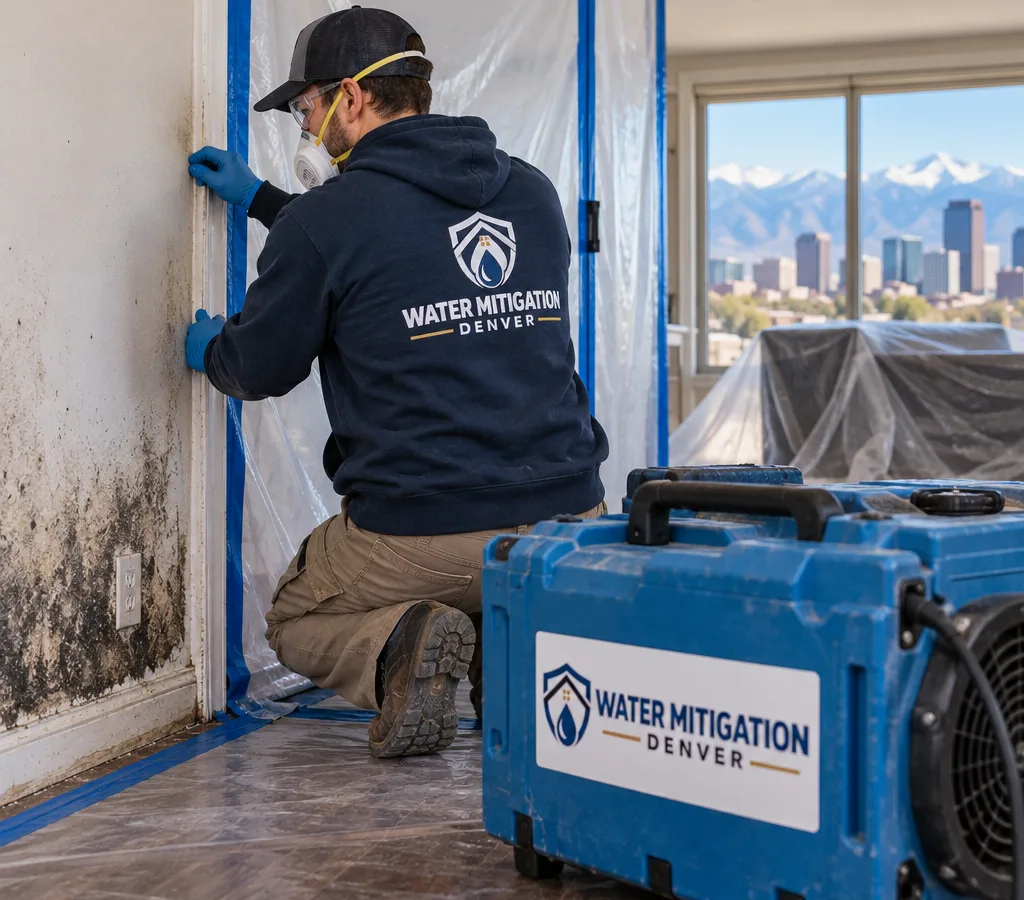
Contain growth and moisture early
Searching for mold mitigation Denver usually means you need two things quickly: a straight answer on how far the mold spread, and a plan to stop it from getting worse. Mold can start growing within 24 to 48 hours after materials stay wet, so the sooner the area is contained and dried, the smaller the remediation scope usually is.
At Water Mitigation Denver, we approach mold mitigation as a controlled job, not a spray-and-go visit. We focus on the basics that matter in real buildings: isolating the affected area, protecting clean spaces, removing contaminated porous materials when needed, cleaning remaining structural surfaces with HEPA methods, and addressing moisture sources so the problem does not come right back.
Denver's mix of older plaster-and-lath homes common around Capitol Hill and Wash Park and newer tight-build construction can change how mold behaves. Older assemblies can hide moisture behind multiple layers, while newer homes can trap humidity in cavities if a leak goes unnoticed. Either way, the right first step is a careful inspection and a written scope that matches what we actually see on site.
If this mold issue started after a leak, overflow, or other moisture event, our team also handles related water damage mitigation so drying and remediation stay coordinated under one plan.
Controlled remediation support
We use physical barriers (poly sheeting), controlled entry, and negative air when appropriate to keep spores and dust from migrating into clean rooms, hallways, and HVAC returns.
Pin and pinless moisture meters help identify wet drywall, subfloor edges, and framing so we are not guessing. We also check adjacent rooms and the other side of shared walls when the layout calls for it.
HEPA air scrubbers and HEPA vacuuming reduce airborne particulate during and after removal. Surfaces that can be saved are cleaned using methods appropriate to the material and contamination level.
If drywall, insulation, carpet pad, or other porous materials are contaminated, removal is often the correct approach. Debris is bagged and handled to limit cross-contamination.
Drying is part of mitigation. We use dehumidification and airflow management as needed so rebuilt materials are not installed back onto damp framing or sheathing.
You get a simple explanation of what we found, what we did, and what still needs to happen. If repairs are required after remediation, we outline what should be rebuilt without turning this visit into a sales pitch.
Control first, then clean and dry
Every building is different, but successful remediation follows a consistent control-first process.
We start by identifying the likely moisture source and the boundaries of affected materials. In Denver, we often see mold tied to plumbing leaks in multi-story homes, slow window or roof leaks that show up after storms, and damp areas around basements and crawlspaces. Once the suspected area is defined, we set containment before disturbing any materials.
During removal and cleaning, we focus on source materials and reservoirs. That can mean removing sections of drywall to access a wet cavity, pulling baseboards to inspect the bottom edge of the wall, or addressing insulation that stayed wet too long. We use HEPA filtration while work is underway, then perform detailed cleaning on remaining surfaces.
Finally, we confirm drying goals and walk you through what should happen next. If the job is in a rental or multi-unit building, we can coordinate access and sequencing to keep the disruption contained.
We regularly work across central neighborhoods like Capitol Hill, where older buildings and shared walls can spread moisture and odors; Washington Park, where older wall assemblies can hide a slow leak; and Five Points, where historic and renovated material layers matter. We also take on jobs in newer areas like Stapleton/Central Park, where tight construction makes controlled drying and humidity management especially important.
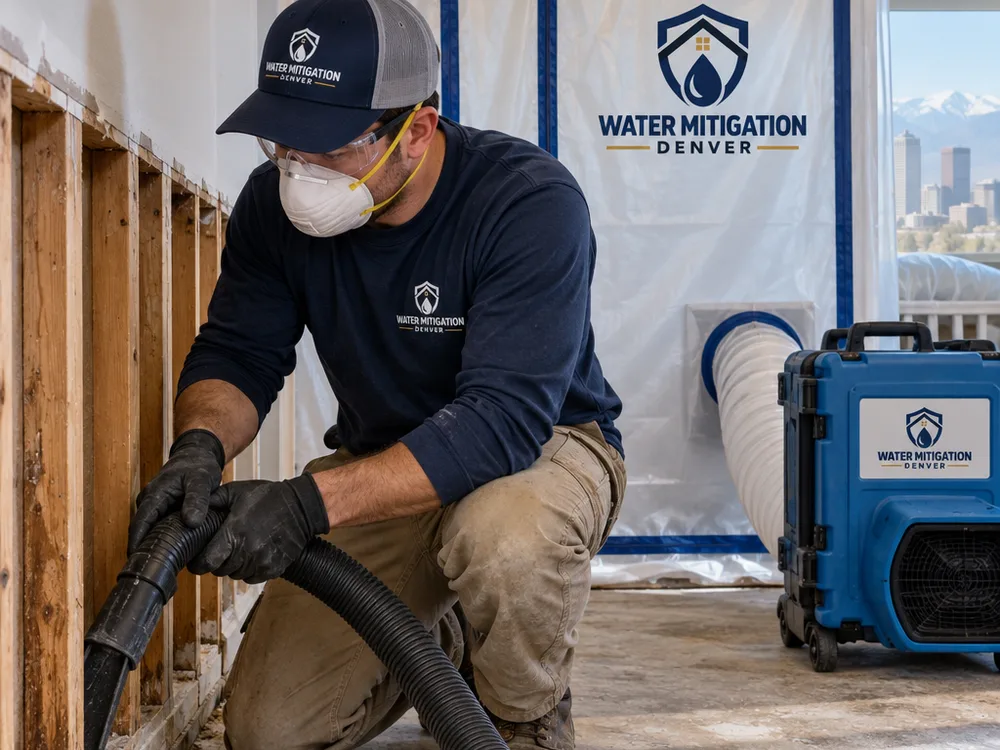
We assess visible growth, odor patterns, and moisture readings, then plan containment and PPE needs before any demolition or cleaning starts.
We isolate the work zone, protect pathways, and use HEPA air scrubbers or negative air when conditions call for it.
Contaminated drywall, insulation, carpet pad, or other porous items are carefully removed and bagged to limit spread.
We HEPA vacuum, wipe, and detail-clean framing and other surfaces that can be retained, using methods matched to the material and level of contamination.
We set drying equipment as needed and confirm what needs to be repaired or adjusted so the area does not stay damp.
We explain what was done, what was removed, and what is needed for rebuild. If you are coordinating with insurance or a property manager, clear documentation helps keep everyone aligned.
Understanding the scope
Mold mitigation in Denver typically ranges from about $1,500 to $6,500 for smaller contained areas, while larger multi-room or HVAC-adjacent projects often run $7,500 to $15,000+ depending on demolition and drying needs. The biggest cost drivers are how far the contamination spread, what porous materials must be removed (drywall, insulation, flooring), access to affected cavities, and whether the moisture source repair is straightforward. Exact pricing is confirmed after an on-site inspection and a written scope.
Request Emergency ServiceAnswers before remediation starts
Start times depend on current demand, but mold situations are treated as time-sensitive because wet materials can support growth within 24 to 48 hours. If you reach out with photos, the location of the suspected area, and whether water is still present, we can typically tell you the safest immediate steps, such as limiting HVAC use in the affected zone, and schedule the next available inspection.
We focus on inspection, containment, and remediation work; testing is sometimes useful, but it is not required for many straightforward remediation jobs where visible growth and moisture are present. If testing is needed for a specific reason, such as real estate documentation, disputes, or unclear sources, we can discuss options during the inspection so results match the decision you need to make.
Sometimes, yes, but it depends on whether the mold is only on a cleanable surface or has colonized porous materials or a wall cavity. Surface growth on non-porous materials may be cleaned, while drywall, insulation, and other porous products often need removal once contaminated. We confirm this by looking at material condition, moisture readings, and what's accessible without spreading contamination.
In practice, mold mitigation includes removal of contaminated materials when needed, plus the containment, air control, cleaning, and drying steps that prevent spread and reduce the chance of return. If you only remove what you can see without controlling air and moisture, the underlying issue often remains.
Keep people and pets out of the affected area, avoid running fans that blow across visible growth, and limit HVAC operation if you suspect mold is near a return or supply. If the source is active water, stop it if it is safe to do so and place towels or a catch container to reduce further wetting. Do not paint over or bleach-spray large areas; that can make assessment harder and may not address contaminated porous materials.
Insurance handling varies by policy and the cause of loss, but clear documentation and a written scope help whether you are filing a claim or paying out of pocket. If the mold is connected to a sudden water event, like a supply line break, that documentation often matters more than if it developed from long-term seepage. We can provide job notes and photos appropriate to the work performed.
Yes. Commercial jobs often need tighter scheduling, access coordination, and more emphasis on containment so adjacent suites stay operational. If you manage apartments or multi-tenant buildings, we can align work hours, staging, and documentation so tenants and ownership stay informed.
Start with a clear inspection
Tell us what you are seeing (odor, staining, recent leak, rooms affected) and we will schedule an inspection, explain the scope in plain language, and outline the safest next steps for your property.