IM
Immediate mitigation, not guesswork
We start with a safety check, locate the likely source path, and set a drying plan based on material types—drywall, plaster, hardwood, carpet, and tile—and how water behaves in each.
Serving Denver, Colorado & surrounding areas
Emergency water damage service • Denver, CO
When water is spreading, minutes matter. We respond fast, stop the source when possible, remove water, and start controlled drying to limit damage and get you back to normal.
✓Rapid mitigation
✓Measured drying plan
✓Denver-area service
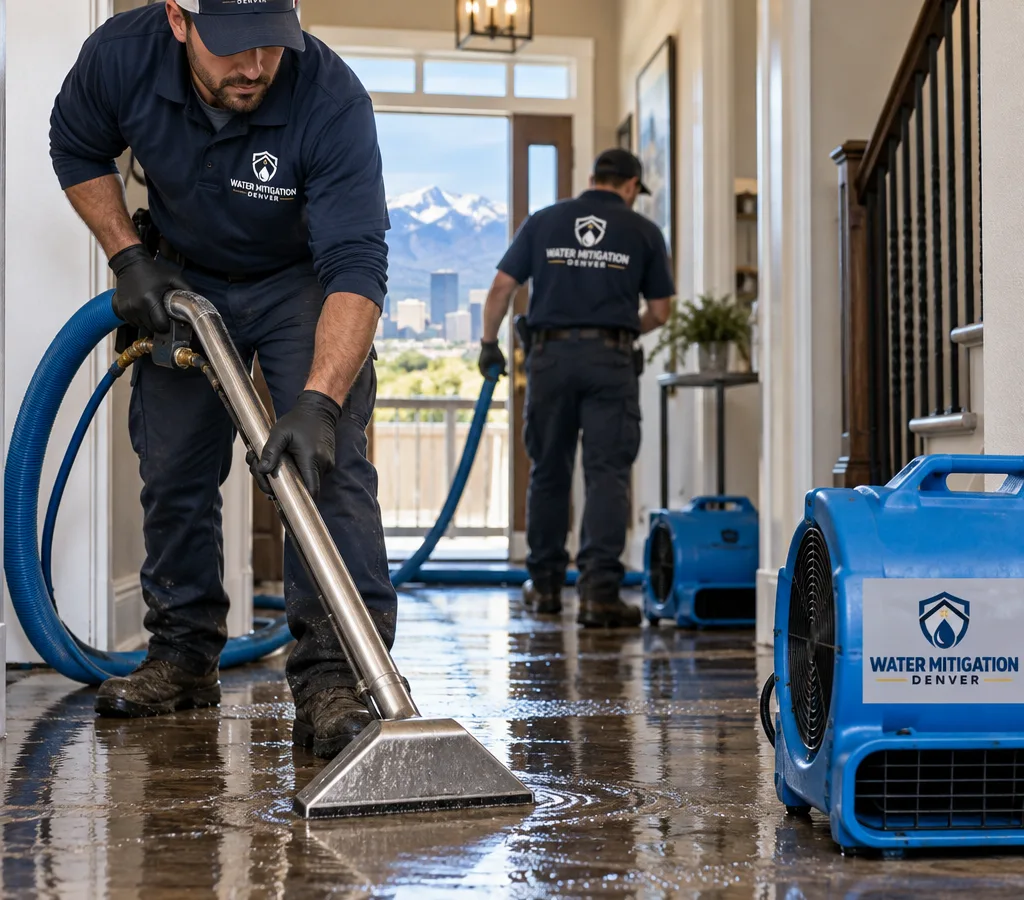
Control the spread early
If you are dealing with emergency water damage Denver property owners see after a supply line leak, water heater failure, overflowing fixture, or storm-related water intrusion, the first goal is simple: stop the spread and start drying before materials swell, warp, or grow microbes.
Water Mitigation Denver focuses on rapid mitigation. That means we prioritize source control when it is safe, water removal, targeted demolition only where necessary, and a drying plan that is measured, documented, and adjusted as conditions change. We work in Denver and the surrounding area, including older housing stock where plaster, lath, and layered flooring can hold moisture longer than newer assemblies.
Denver neighborhoods with a mix of mid-century and older homes, like Wash Park and Congress Park, often have multiple flooring layers and tight wall cavities that hide dampness. In Lower Highlands (LoHi) and downtown areas, multi-unit buildings add complexity because water can migrate between units quickly.
Wherever you are, the approach is the same: find where the water traveled, remove what cannot be dried in place, and dry what can.
Measured emergency response
We start with a safety check, locate the likely source path, and set a drying plan based on material types—drywall, plaster, hardwood, carpet, and tile—and how water behaves in each.
We use high-capacity extraction, air movers, and dehumidification sized to the affected area so drying is active and controlled, not just fans running in the background.
We track moisture in structural materials with meters and map readings so decisions are based on measurements, especially for wall cavities, subfloors, and baseboards.
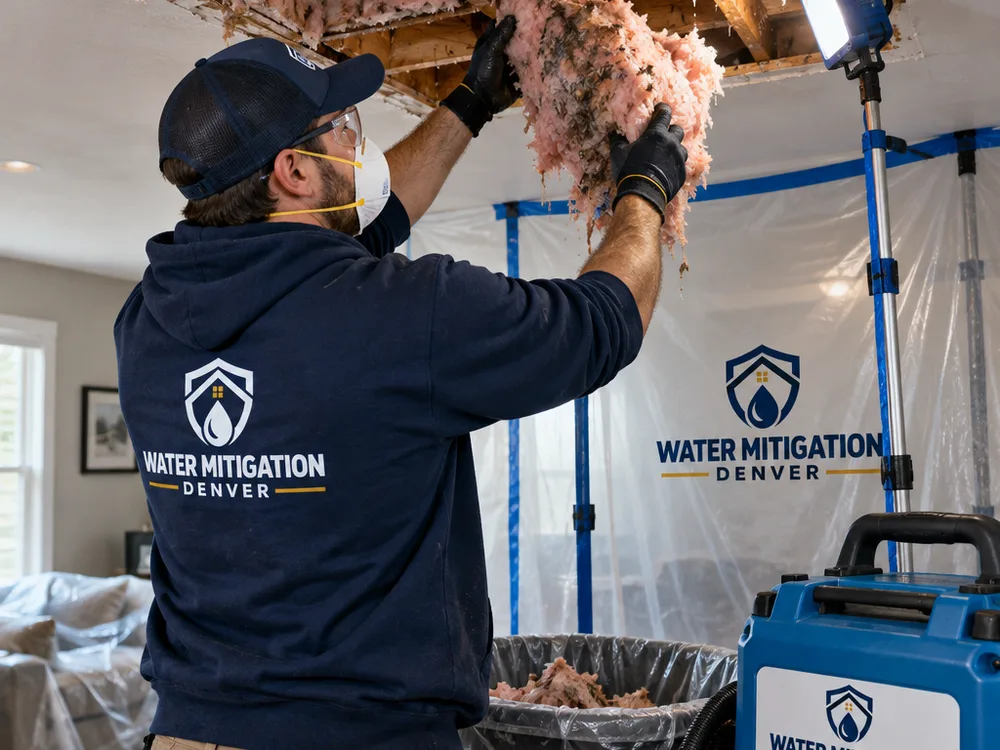
When wet drywall, insulation, or other porous materials must be removed, we can set containment to reduce dust migration and keep the rest of the property usable.
You get a straightforward explanation of what can be dried in place, what must come out, and what the next phases look like so you can make decisions quickly.
Reduce damage safely
If it is safe, take these steps to reduce damage while help is on the way:
Even small leaks can soak under baseboards and into subfloors. The sooner moisture is measured and controlled, the better the odds of drying without secondary damage.
Request Emergency Service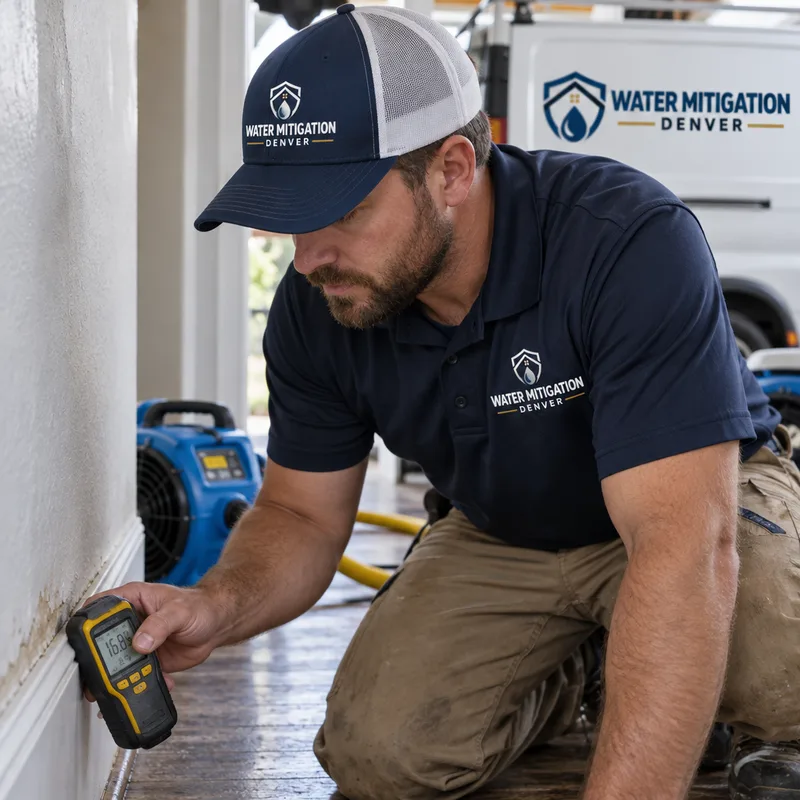
A controlled mitigation sequence
We confirm the water source status, check for electrical and slip hazards, and identify materials that cannot be safely dried, such as saturated insulation behind finished walls.
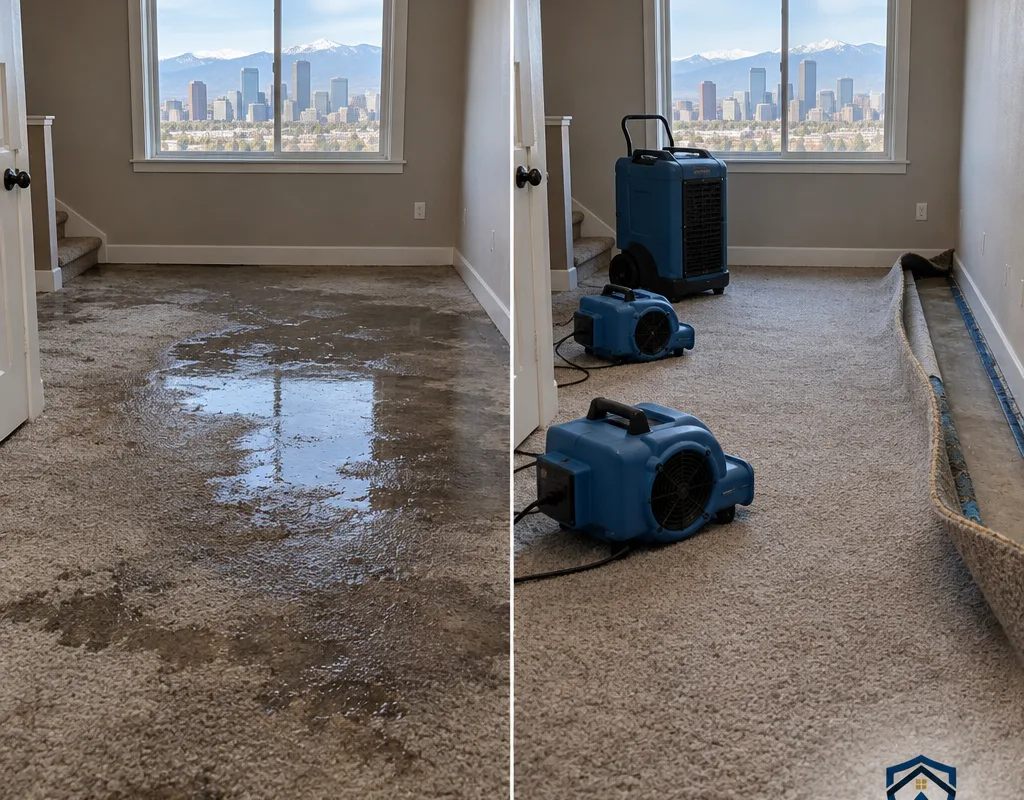
We remove standing water fast, then pull wet items and damaged materials as needed so airflow can reach wall bottoms, subfloors, and cavities.
Air movers and dehumidifiers are placed based on the room layout and moisture mapping. We control drying to protect materials like hardwood and trim where possible.
We re-check moisture levels and adjust equipment. Drying is done when readings stabilize to an acceptable level for the material and assembly, not when the surface merely looks dry.
Once mitigation is complete, we review what was removed, what is ready for rebuild, and what documentation you may want for your records.
Understanding the scope
Emergency water damage mitigation in Denver typically ranges from about $900 to $3,500 for smaller, contained losses, while larger multi-room events can run $4,000 to $12,000+ depending on how far water traveled. Costs change most with the affected square footage, water category (clean vs contaminated), how many layers must be opened to dry—baseboards, drywall, and flooring—equipment days, and after-hours response. The exact price is confirmed after an on-site inspection and moisture mapping.
Request Emergency ServiceField-ready response
Customer experiences
“A supply line let go while we were out. They showed up quickly, got the water out, and explained what had to be opened up to dry the walls. The moisture checks made it clear when things were actually dry.”
“We had water coming into a lower level after a heavy storm. The team mapped the wet areas, pulled what couldn't be saved, and set up drying so we could still use part of the house.”
Answers before mitigation starts
You should start mitigation immediately because water spreads through flooring seams, drywall, and subfloors quickly, and hidden moisture becomes harder to dry the longer it sits. The practical goal is to stop the source, extract standing water, and begin controlled drying as soon as you can safely do so.
Sometimes, yes, but it depends on how saturated the cavity is and whether insulation is involved. If moisture mapping shows elevated readings at the wall base or around penetrations, we may recommend selective openings—for example, removing baseboards or a flood cut—so the assembly can dry reliably instead of trapping moisture.
Clean water usually comes from a broken supply line or a leaking fixture feed and can often be mitigated with drying and limited removal. Contaminated water, such as sewage backups or some outdoor flooding, typically requires more removal, cleaning, and containment because porous materials that absorb it are often not safe to dry in place.
Yes. We can provide a clear scope of what was affected, what was removed, equipment used, and moisture documentation, which helps support a claim review. Coverage decisions come from your policy and carrier, but good documentation makes the situation easier to evaluate.
Yes. Multi-unit buildings add urgency because water can migrate through wall chases and floors, affecting units below or adjacent. We focus on quick source control, moisture mapping boundaries, and coordinating access so drying is aimed at the actual wet assemblies, not just the visible area.
Avoid running household fans at random, turning on HVAC if water entered vents, or pulling up flooring without a plan, because it can spread moisture or create additional damage. Avoid using shop vacs near electrical hazards. The safer path is source shutoff, basic item removal, and getting a measured mitigation plan in place.
Start mitigation now
Tell us what happened, what areas are wet, and whether the water source is stopped. We will respond with a clear plan to extract, dry, and document the loss so you can move forward.